
Neighborhood guide
Old East Dallas neighborhood guide
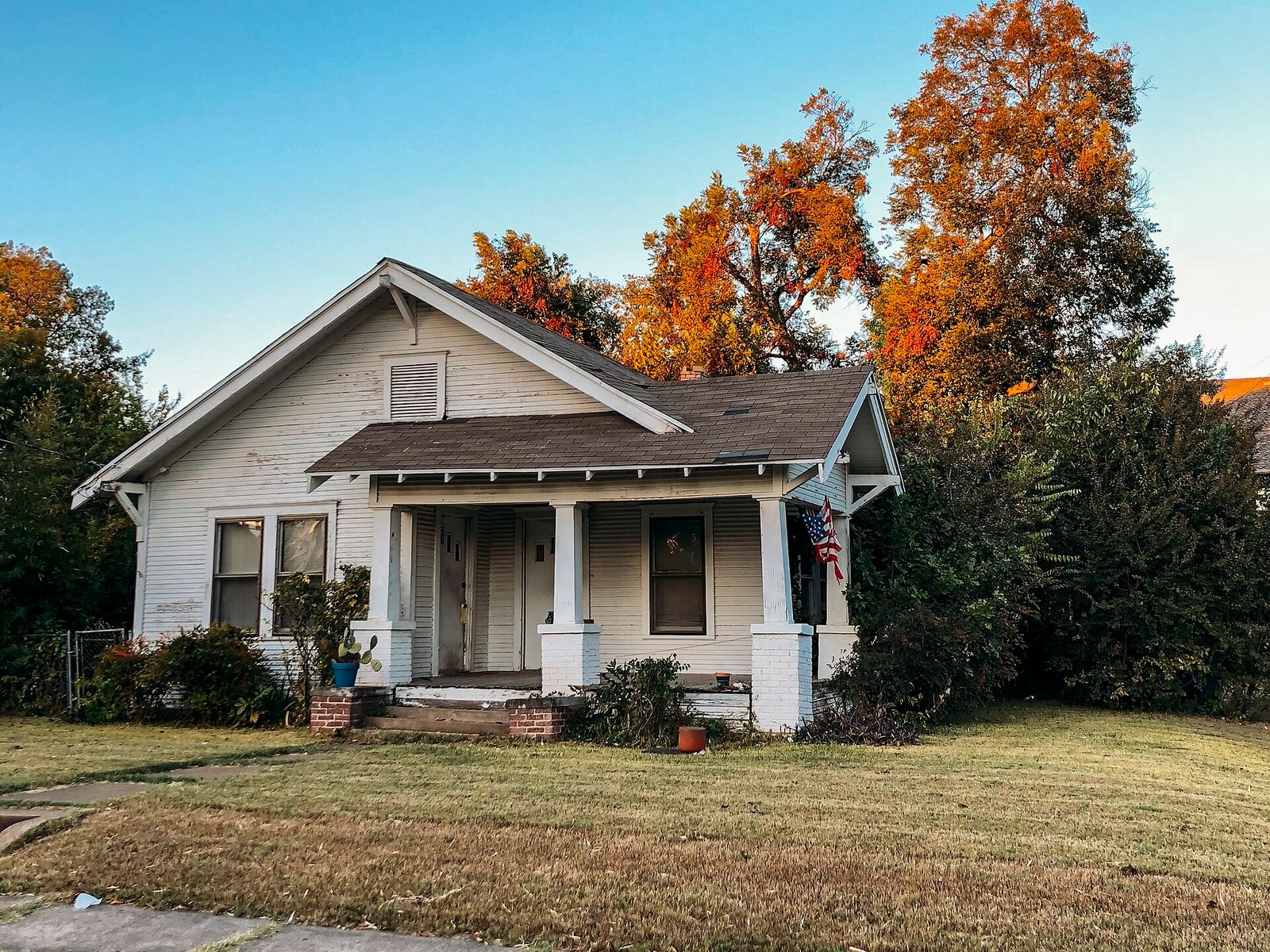
Old East Dallas is the historic core of the city's east side. It sits just east of downtown, with Deep Ellum to the southwest and Fair Park to the south. Here you'll find Victorian houses, apartment buildings from the streetcar days, and several historic districts close together.

It started as its own town #
East Dallas was once a separate town. The Handbook of Texas tells the story:
- In 1872, William H. Gaston promoted land east of Dallas and helped bring in the railroads. The Houston and Texas Central arrived in July 1872, and the Texas and Pacific in February 1873.
- East Dallas incorporated as a town on September 9, 1882, on about 1,400 acres.
- In 1886, it built the first all-brick schoolhouse in Dallas County.
- On January 1, 1890, Dallas annexed East Dallas. Dallas took over the town's streets, schools, and public buildings.
There is no official boundary for "Old East Dallas" today. People use the name for the older blocks east of downtown, roughly from the Baylor medical district out toward Munger Place and the Swiss Avenue area. The easiest way to know the area is through its historic districts.
Historic districts #
The City of Dallas Landmark Commission protects several districts here. In a landmark district, the City requires a Certificate of Appropriateness before work begins on a property, including exterior changes and new landscaping. If you rent here, check with your landlord before you change anything outside.
- Peak's Suburban Addition. Dallas made this its fourteenth historic district in 1995. It covers about 125 acres generally bounded by Haskell Avenue, Gaston Avenue, Peak Street, Sycamore Street, Fitzhugh Avenue, and Worth Street. The City says it has one of the highest concentrations of Victorian homes in Dallas. It also has Prairie-style houses and apartment buildings from the 1920s and 1930s, when streetcars ran through the area.
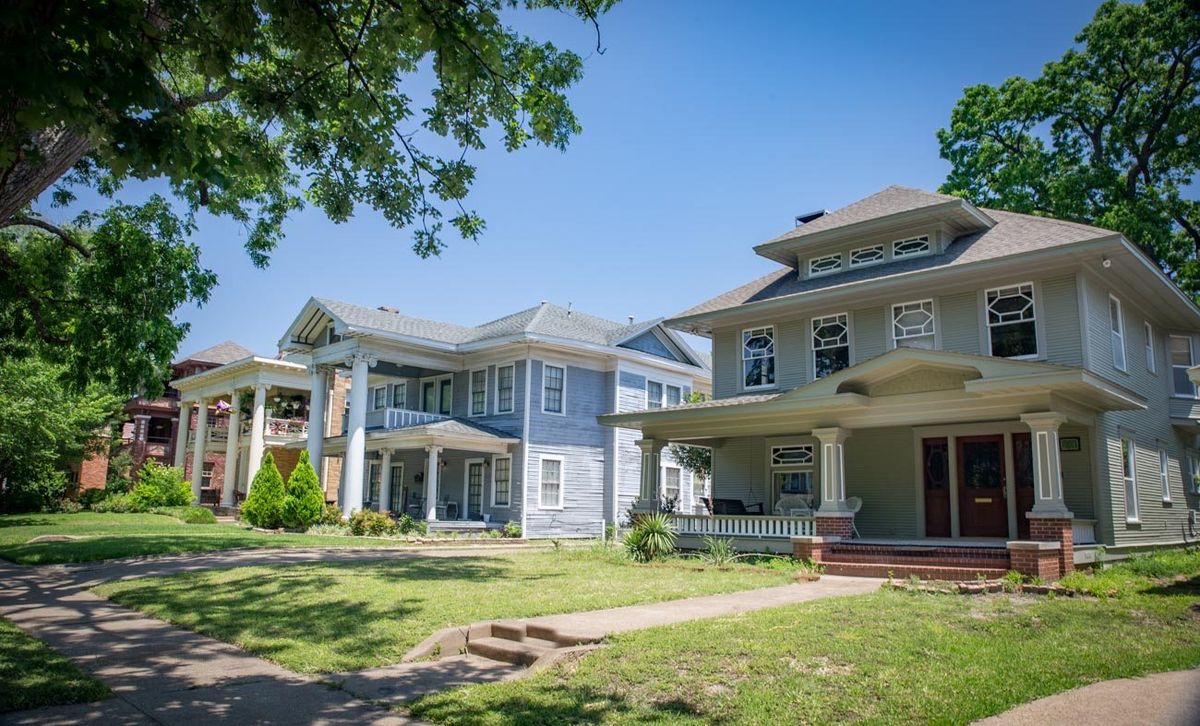
- Munger Place. This district has more than 200 homes. The City calls it the largest intact collection of Prairie-influenced buildings in North Texas. Many show the influence of the Prairie four-square, a boxy two-story house style. It was developed starting around 1905 and became a Dallas historic district in 1980. Its current rules date from 1988.
- Swiss Avenue. Dallas's first historic district, designated in 1973. Read our Swiss Avenue guide.
- Wilson Block. On the 2900 block of Swiss Avenue are six frame houses built from 1899 to 1902 in late Victorian and Queen Anne styles. A state marker there says Henrietta and Frederick Wilson built their own home in 1899, then built the other houses as rentals.
- Junius Heights. A large district of Craftsman, Prairie, and Tudor homes farther east, along Gaston Avenue and Abrams Road. Read our Junius Heights guide.

Homes and buildings #
Old East Dallas has a wide mix of buildings:
- Victorian and Queen Anne houses from the late 1800s and early 1900s
- Prairie four-squares and Craftsman bungalows from about 1905 to 1920
- Apartment buildings from the 1920s and 1930s, built along the old streetcar lines
One good example of the older apartments is the 1928 building at 4928 Bryan Street. The City notes its Mediterranean style and calls it a fine example of the early apartment buildings that grew up in East Dallas in the 1920s. It is a Dallas landmark and is on the National Register.
Parks and landmarks #
- Buckner (Samuell) Park (4550 Worth Street). A 9.3-acre neighborhood park with basketball, a playground, soccer, softball, tennis, and picnic tables.
- Exall Park (3501 Live Oak Street). A 10.4-acre community park with a recreation center, softball, basketball, a playground, and trails.
- Baylor University Medical Center (3500 Gaston Avenue). This large hospital campus began in 1903 and is a Level I trauma center.
- Fair Park, just to the south. Home of the State Fair of Texas and the Cotton Bowl stadium. Much of it was rebuilt for the 1936 Texas Centennial Exposition. The City says it is one of the largest surviving Art Deco complexes in the United States.
- Deep Ellum, just to the southwest. A long-running arts and music district along Elm Street. R. S. Munger, who later developed Munger Place, built his first cotton gin factory there in 1884.
Getting around #
Old East Dallas is close to several DART rail stations.
By train. Three Green Line stations serve the area:
- Baylor University Medical Center Station, 2900 Junius Street (at Hall and Junius). Bus Routes 1, 9, and 18 stop there.
- Deep Ellum Station, 450 N. Good-Latimer Expressway (at Gaston Avenue).
- Fair Park Station, 3710 Parry Avenue. Bus Routes 23 and 214 stop there.
Cityplace/Uptown Station, at Haskell Avenue and North Central Expressway, serves the Red, Blue, and Orange lines.
By bus. These DART routes run on the main streets:
- Route 9 on Gaston Avenue
- Route 3 on Ross Avenue
- Route 205 on Live Oak Street
- Route 249 on Columbia Avenue
- Routes 18 and 23 on Haskell Avenue
- Route 23 on Peak Street
Routes and schedules change. Check dart.org or the GoPass app before you ride. See our neighborhoods page for fare basics.
By car. Gaston Avenue, Ross Avenue, Live Oak Street, and Columbia Avenue run out from downtown toward the northeast. Haskell Avenue and Peak Street cross them. North Central Expressway (U.S. 75) is to the west.
Schools #
Schools are assigned by address. To see the Dallas ISD schools for a home, enter its address in the Dallas ISD School Finder. Dallas ISD suggests calling the school to confirm before you enroll.
Homes for rent in Old East Dallas #
Browse the homes for rent. Each home's page shows its neighborhood, its rent and terms, and whether it is a lease or a short stay. Questions? Ask on the home's page, or contact us.
Was this page helpful?
Your answer is sent to the site team with this page's address. Privacy policy
More East Dallas neighborhoods
Casa Linda
A guide to Casa Linda in East Dallas, with the 1945 Spanish Revival Casa Linda Plaza, homes from the late 1930s on…
Junius Heights
A guide to the Junius Heights Historic District in East Dallas, a 1906 streetcar suburb of Craftsman bungalows, with its…
Lakewood
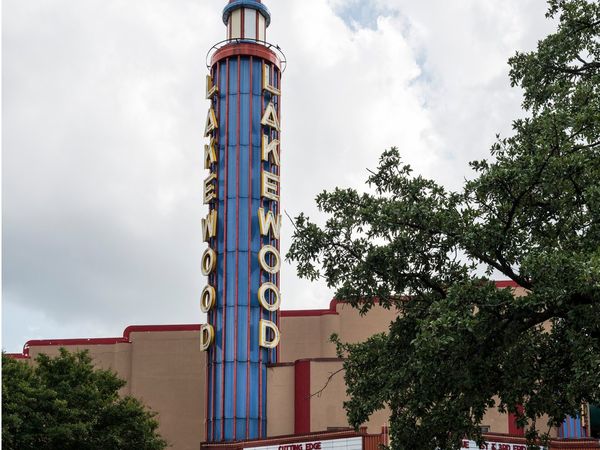
A guide to Lakewood in East Dallas, with the 1938 Lakewood Theater, the shopping center, 1920s and 1930s homes, parks…
Lower Greenville
A guide to Lower Greenville in East Dallas, with the shops on Greenville Avenue, early 1900s homes on its side streets…
M Streets
A guide to the M Streets, or Greenland Hills, in East Dallas, with 1920s Tudor homes, the conservation districts, nearby…
Swiss Avenue
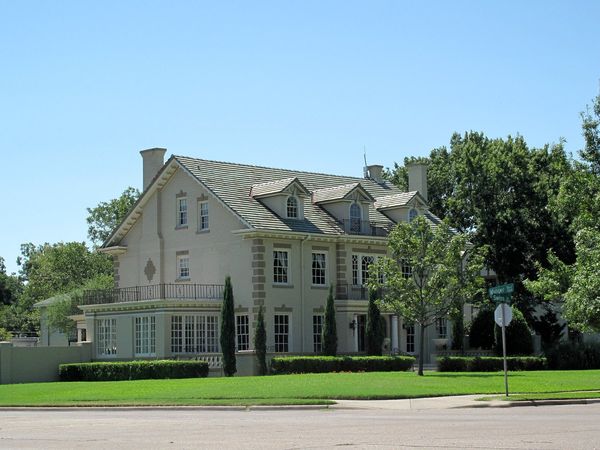
A guide to the Swiss Avenue Historic District in East Dallas, with its history, early 1900s homes, Savage Park, the…
White Rock
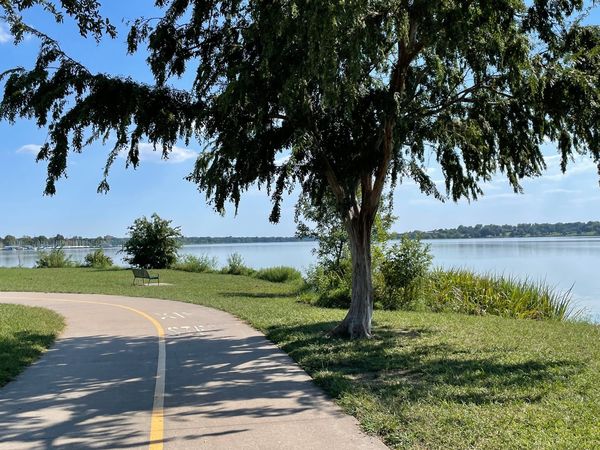
A guide to the White Rock Lake area in East Dallas, with the lake's history, its 9.33-mile trail, the Arboretum, the…
All neighborhoods
Every East Dallas neighborhood guide on one page.
Photo: "Swiss Miss" by Matthew Rutledge, CC BY 2.0, via Flickr. Cropped; yard sign and curb number removed. All photo credits